
Written By Jonathan Howe
Affiliate disclosure: Some links in this article are affiliate links. If you book through them, we earn a small commission at no extra cost to you. This doesn’t influence which options we recommend or what we write — the advice is the same regardless.
Cost of Living in Montenegro (2026): What You’ll Actually Spend
Author – Jonathan Howe – LinkedIn
TL;DR
Montenegro is genuinely affordable compared to Western Europe — but it’s no longer the ultra-cheap secret it was five years ago. A single person living comfortably needs €1,200–€1,500/month (including rent). A couple should budget €1,800–€2,500/month. Podgorica is the cheapest city for long-term stays; coastal towns like Budva and Kotor cost 20–40% more in summer. Montenegro uses the Euro (€), which makes budgeting simple for most expats and nomads.
Monthly Budget Summary — What You’ll Actually Need
Here’s a realistic three-tier breakdown for a single person living in Montenegro in 2026. All figures are in EUR; USD column uses 1 EUR = 1.08 USD.
Expense | Budget (€) | Mid-Range (€) | Comfortable (€) |
|---|---|---|---|
Rent (1-bed) | 350–450 | 550–750 | 900–1,400 |
Food & Groceries | 150–200 | 250–350 | 400–550 |
Eating Out | 80–120 | 150–250 | 300–500 |
Transport | 30–50 | 50–100 | 100–200 |
Utilities (incl. internet) | 80–120 | 130–180 | 180–280 |
Entertainment/Leisure | 30–60 | 80–150 | 200–400 |
Total (EUR) | €720–€1,000 | €1,210–€1,780 | €2,080–€3,330 |
Total (USD approx.) | $778–$1,080 | $1,307–$1,922 | $2,246–$3,596 |
Budget tier: frugal nomad or backpacker, shared housing, cooking at home, local buses only.
Mid-range tier: comfortable expat lifestyle, private 1-bed apartment, mix of cooking and eating out, occasional taxi.
Comfortable tier: professional or family, modern apartment, regular dining out, car or frequent taxis, gym, travel.
Rent in Montenegro — Prices by City (2026)
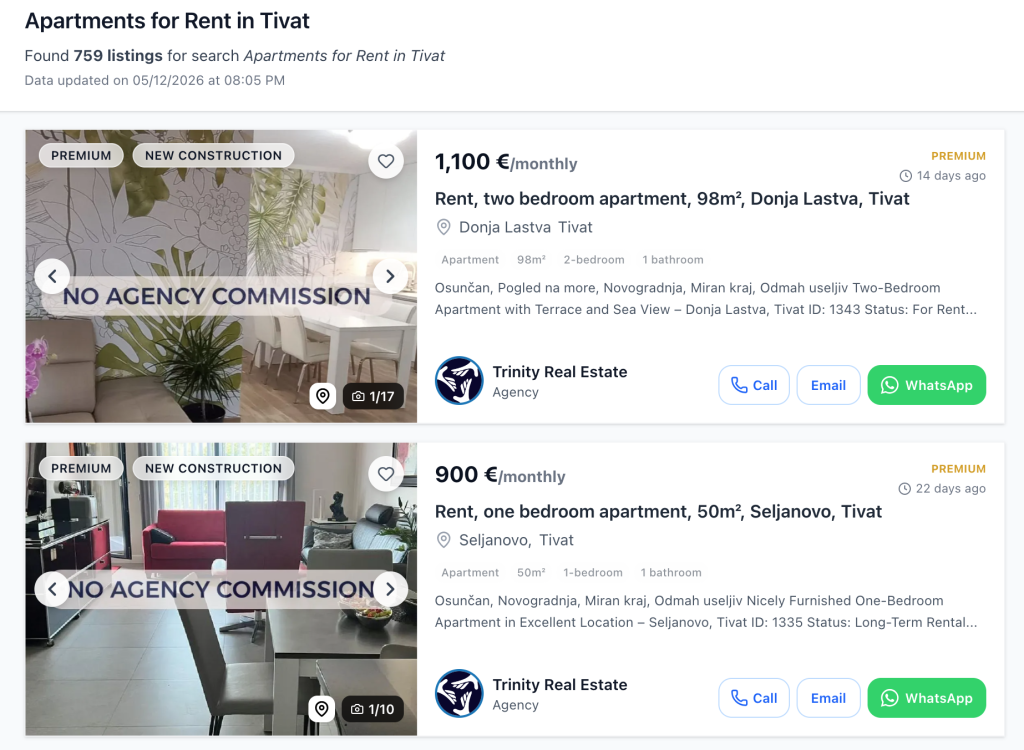
Rent is your biggest variable. The gap between Podgorica and the coast is significant — and it widens dramatically in summer.
City | 1-Bed (off-season) | 1-Bed (peak summer) | 2-Bed (off-season) | 2-Bed (peak summer) |
|---|---|---|---|---|
Podgorica | €400–€600 | €400–€600 | €600–€1,000 | €600–€1,000 |
Budva | €500–€800 | €700–€1,200 | €800–€1,400 | €1,200–€2,000 |
Kotor | €550–€900 | €800–€1,200 | €900–€1,400 | €1,200–€1,800 |
Tivat | €650–€1,000 | €900–€1,500 | €1,000–€1,600 | €1,400–€2,200 |
Herceg Novi | €400–€700 | €600–€1,000 | €650–€1,100 | €900–€1,500 |
A few things to know before you sign anything:
Podgorica is the clear winner for long-term affordability. Prices don’t depend on tourism or season — they stay stable year-round.
Coastal rents spike 20–40% in summer (June–September). If you’re planning a long stay, negotiate a 12-month contract in autumn or winter.
Modern builds with parking and a lift cost more. Older apartments are cheaper but may have higher utility bills.
Expect a deposit of 1–2 months’ rent upfront.
Food & Groceries
Supermarket Prices
The main chains you’ll use are Voli (local, good quality), Idea, Aroma, and HDL (hypermarket). Prices below reflect what you’ll pay in-store in 2026:
Item | Price Range (EUR) |
|---|---|
Milk (1L) | €0.95–€1.70 |
Bread (loaf) | €0.40–€1.50 |
Eggs (10) | €1.90–€3.35 |
Chicken breast (1kg) | €4.00–€6.50 |
Tomatoes (1kg) | ~€2.23 |
Potatoes (1kg) | ~€0.92 |
Domestic beer (bottle) | €1.00–€1.50 |
Cappuccino (café) | €1.30–€3.00 |
Bottle of wine (decent) | ~€5.00 |
Water (1.5L bottle) | ~€0.70 |
Buying seasonal produce at the local pijaca (open market) is noticeably cheaper than supermarkets — especially for vegetables and fruit. Worth the short detour.
Eating Out
Montenegro has a solid range of options, from dirt-cheap local spots to tourist-facing restaurants with inflated menus.
Type | Cost |
|---|---|
Cheap meal at a local restaurant | €6–€15 |
3-course meal for 2 (mid-range) | €25–€65 |
Beer at a bar | €1.50–€4.00 |
Coffee (espresso or cappuccino) | €1.30–€3.00 |
Cinema ticket | €3.70–€5.50 |
Pro tip: Look for a konoba — a traditional Montenegrin restaurant. These are almost always cheaper than tourist-facing places and the food is better. A full meal with a beer at a good konoba rarely costs more than €12.
Avoid restaurants directly on the Old Town walls in Kotor or on Budva’s main strip in peak season — you’re paying a 30–50% location premium.

Utilities & Internet
For an 85m² apartment, expect to pay:
Service | Monthly Cost |
|---|---|
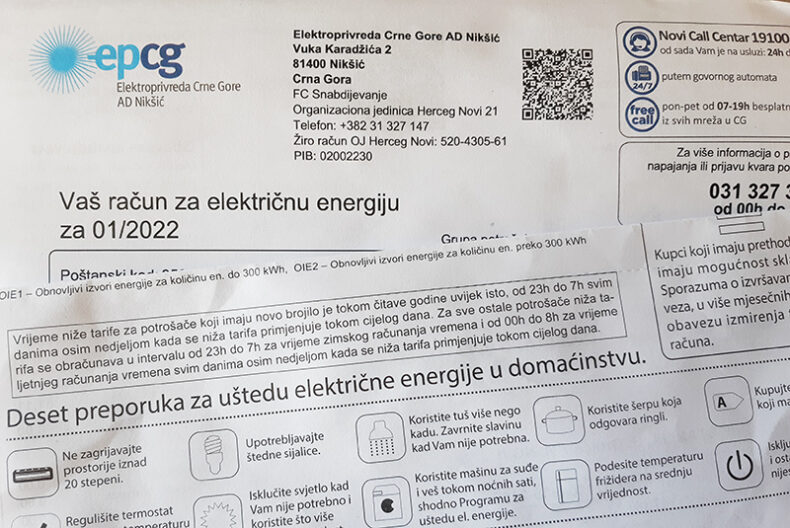
Electricity + water + heating/cooling | €115–€280 |
High-speed internet (fibre) | ~€30 |
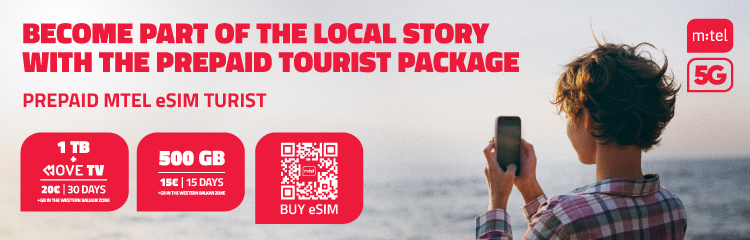
Mobile SIM with data | €10–€20 |
A few important notes for 2026:
Energy costs are rising. Electricity prices increased around 12.4% and gas around 20.1% heading into 2026. Budget on the higher end of the range if you’re in a poorly insulated apartment or use air conditioning heavily.
Internet is reliable. Fibre is standard in Podgorica and most coastal towns. Speeds of 200+ Mbps are common.
For SIM card options and the best mobile data plans, see our guide: SIM cards and eSIMs in Montenegro
Transport
Getting around Montenegro is cheap if you use public transport. Having a car opens up a lot more of the country, but it’s not essential if you’re based in Podgorica or a coastal town.
Transport | Cost |
|---|---|
Local bus (one-way) | €1.00 |
Monthly bus pass | ~€30 |
Taxi starting price | €0.50–€1.00 |
Taxi per km | €0.60–€1.00 |
Typical 5km taxi ride | ~€3.50 |
Car rental (economy, per day) | from €25/day |
Podgorica has decent bus coverage and you can get most places on foot or by bus. The coastal towns are harder without a car — public transport between them exists but is infrequent outside peak season.
For a full breakdown of how taxis work (apps, fixed prices, airport transfers), read our guide: Taxis in Montenegro

Digital Nomad Budget in Montenegro
This is where Montenegro really earns its reputation. The combination of low costs, Euro currency, reliable internet, and a growing expat community makes it one of the more practical bases in the Balkans for remote workers.
Why nomads choose Montenegro
Low cost of living relative to Western Europe, with no currency conversion hassle (Euro is used)
EU candidate country — straightforward residency path for longer stays – Residency in Montenegro
Reliable fibre internet in most cities (200+ Mbps typical)
Digital nomad visa available — see our dedicated guide: Montenegro Digital Nomad Visa
Stunning scenery, short travel distances, and a growing expat community
Coworking Spaces
Montenegro’s coworking scene has grown fast. Here’s where to work city by city:
Podgorica:
Mtel Digitalna Fabrika — free to use, well-equipped, central location
NEST Coworking — private desks, meeting rooms, open 24/7, good for longer stays
Budva:
AdriaHub — popular with the nomad crowd, solid internet
Hubrela — cozy, well-located in the town centre, high-speed Wi-Fi, printer, free coffee; day pass around €50/week
ITbranch.house — more tech-focused
Tivat:
Sedam Petaka — near the marina, good facilities
Kotor:
Kotor Nest Coliving (Nomadico) — coliving and coworking combined, right in the Old Town, fibre Wi-Fi, ergonomic setup
Herceg Novi:
Kolektiv Novi — relaxed atmosphere, terrace, Old Town vibe
Coliving Costs in Montenegro
If you want the full package (accommodation + workspace + community), coliving in Montenegro runs €555–€830/month for a private room, typically including utilities and internet.
Realistic Nomad Budget (Podgorica base)
Category | Monthly Cost |
|---|---|
Rent (1-bed, Podgorica) | €450–€600 |
Food & groceries | €200–€300 |
Eating out | €150–€250 |
Coworking (monthly desk) | €100–€200 |
Transport | €50–€80 |
Utilities + internet | €130–€180 |
Health insurance | €50–€100 |
Misc / leisure | €100–€200 |
Total | €1,230–€1,910 |
The sweet spot is €1,200–€1,800/month all-in for a comfortable nomad lifestyle based in Podgorica.
Health Insurance in Montenegro
If you’re applying for residency, Montenegro requires a minimum €30,000 coverage health insurance policy. Reliable providers used by expats here include Allianz Care, Cigna Global, and MSH International. Budget €50–€100/month depending on your age and coverage level.
Montenegro vs. Other Balkan Countries — Cost Comparison
Montenegro uses the Euro (€) despite not being an EU member — a big practical advantage. No exchange fees, no currency risk, and it’s accepted everywhere.
Here’s how Montenegro stacks up against its neighbours:
Country | Cost vs. Montenegro |
|---|---|
Albania | ~13–16% cheaper than Montenegro |
Serbia | Montenegro ~4% cheaper (similar overall) |
Croatia | Montenegro ~13–17% cheaper (excl. rent) |
Bosnia & Herzegovina | Similar to Montenegro |
Greece | Montenegro significantly cheaper |
Germany | Montenegro ~37% cheaper |
A few notes on these comparisons:
Croatia joined the Eurozone in 2023, and prices have risen sharply since. Montenegro is now clearly cheaper for most everyday expenses.
Albania is cheaper on paper, but the infrastructure and expat services aren’t as developed.
Serbia is comparable, but you deal with a separate currency (Serbian Dinar) and exchange costs.
Average Salary in Montenegro (2026)
Most expats and nomads earn foreign salaries and spend locally — which is exactly why Montenegro works so well as a base. But it’s useful to know what locals earn for context.
Metric | Amount |
|---|---|
Average gross monthly salary | ~€1,000–€1,227 |
Average net monthly salary | ~€700–€900 |
Minimum wage (high school diploma) | €670 net/month |
Minimum wage (university degree) | €800 net/month |
The gross average wage reached €1,227/month in early 2026, up significantly from previous years. Net take-home is lower after Montenegro’s flat 13% income tax (15% above €720/month) and social contributions.
For a local earning €700–€900 net, covering rent plus all living costs is genuinely tight. For a nomad or expat earning a Western salary, Montenegro is very comfortable.
Is Montenegro Expensive? The Honest Answer
It depends entirely on where you’re comparing it to.
Compared to Western Europe: Very affordable. You’ll pay a fraction of what you’d spend in Germany, France, or the UK for the same quality of life.
Compared to Southeast Asia (Thailand, Bali, Vietnam): More expensive. Montenegro doesn’t compete with €500/month budgets. It’s a European country with European infrastructure.
Coastal vs. inland: A big difference. Budva and Tivat in summer cost significantly more than Podgorica year-round. If budget matters, Podgorica is the smart base.
Summer vs. off-season: Coastal prices spike 20–40% from June to September. The same apartment that costs €500/month in November can go for €800+ in July.
Rising prices: Inflation in Montenegro was around 4.9% in late 2025, and energy costs jumped significantly into 2026. Montenegro is no longer the ultra-cheap destination it was in 2019–2021. Prices are rising, but they’re still well below Western European levels.
The sweet spot: Podgorica for year-round affordability, or smaller coastal towns (Herceg Novi, Petrovac) off-season. Avoid Budva and Tivat in July–August if you’re on a tight budget.
FAQ
1. How much does a single person need to live comfortably in Montenegro?
A single person living comfortably — private 1-bed apartment, eating out a few times a week, occasional travel — needs around €1,200–€1,500/month. In Podgorica you can do it closer to €1,200; in Budva or Kotor, budget €1,400–€1,800.
2. Is Montenegro cheaper than Croatia?
Yes. Montenegro is roughly 13–17% cheaper than Croatia for everyday expenses (food, transport, dining out). Croatia joined the Eurozone in 2023 and prices have risen noticeably. Rent in Montenegro is also lower outside peak summer season.
3. What is the cheapest city to live in Montenegro?
Podgorica is the most affordable city for long-term stays. Prices don’t fluctuate with tourism, rents are stable year-round, and you have access to the best infrastructure, coworking spaces, and transport links.
4. Can I live in Montenegro on €1,000 a month?
It’s possible, but tight. You’d need to find a room in a shared apartment (€250–€350), cook most meals at home, and avoid the coast in summer. In Podgorica, a frugal single person can manage €900–€1,100/month. On the coast, €1,000 is very difficult.
5. Is Montenegro good for digital nomads?
Yes — and it’s getting better. Montenegro has a dedicated digital nomad visa, reliable fibre internet, a growing coworking scene in Podgorica and Budva, and a Euro-based economy with no currency hassle. The cost of living is well below Western Europe, and the scenery is genuinely exceptional.
6. Does Montenegro use the Euro?
Yes. Montenegro uses the Euro (€) as its official currency, even though it’s not an EU member. This is a major practical advantage — no exchange fees, no conversion headaches, and your European bank cards work everywhere.
7. How much is rent in Budva?
In 2026, a 1-bedroom apartment in Budva costs €500–€800/month off-season and €700–€1,200/month in summer (June–September). A 2-bedroom ranges from €800–€1,400 off-season to €1,200–€2,000 in peak summer. Always negotiate a 12-month contract if you can — it locks in the off-season rate.
8. Is Montenegro cheaper than Serbia?
Roughly similar. Montenegro is marginally cheaper overall (around 4%), but Serbia uses the Serbian Dinar, which adds currency conversion costs for most expats. Montenegro’s Euro-based economy is more practical for international earners.
Useful Sources
Numbeo — Cost of Living in Montenegro — crowd-sourced price data, updated May 2026
Expatistan — Montenegro Cost of Living — comparison tool with other countries
MONSTAT — Statistical Office of Montenegro — official wage, inflation, and CPI data
Key Nekretnine — Apartments for Rent in Montenegro — live rental listings
Investropa — Montenegro Rents (January 2026) — detailed rent analysis by neighbourhood
